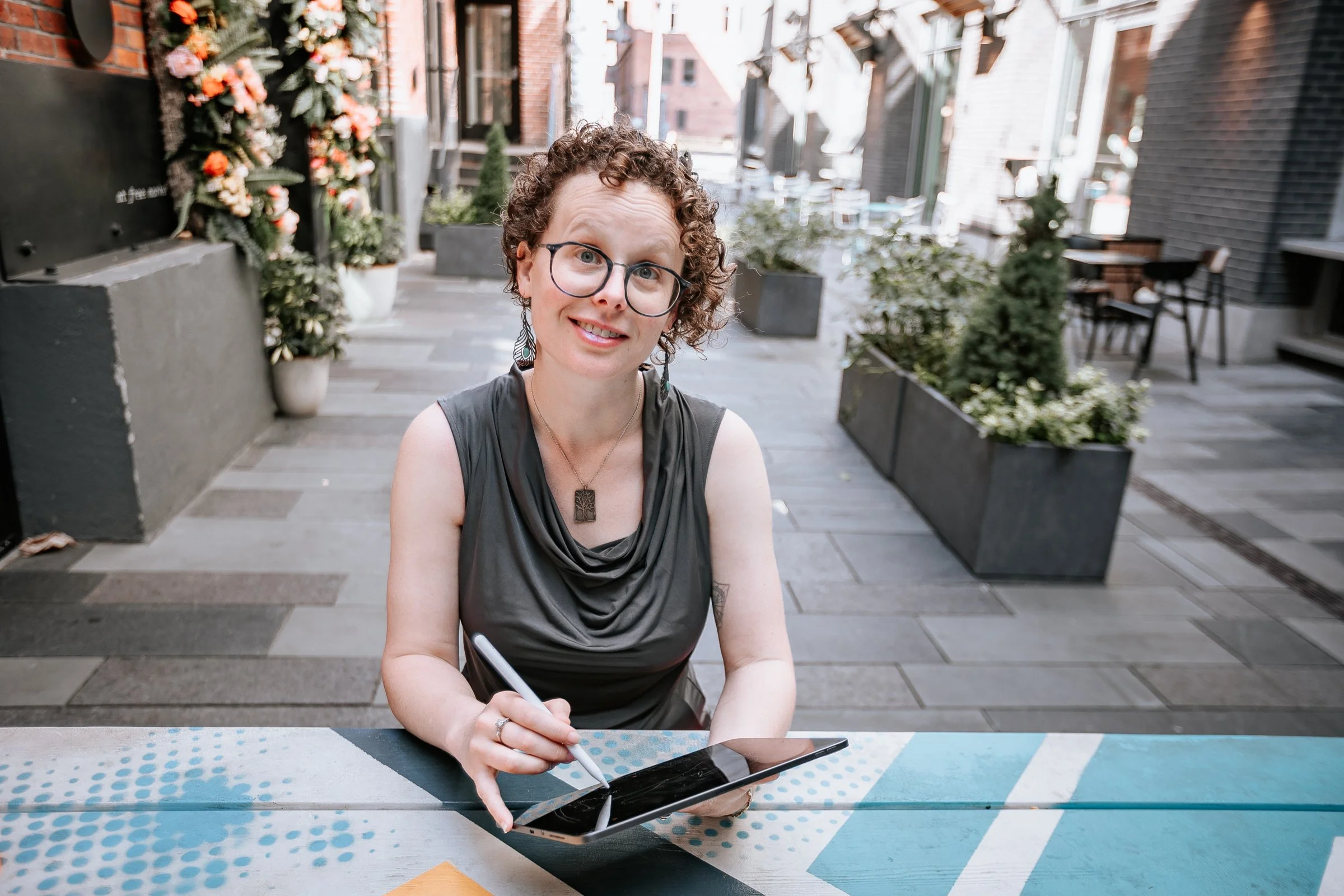
Hi, I’m Lydia Hooper
I’m a strategy and operations leader and consultant who supports mission-driven teams in navigating complexity and transformation in people-centered ways
Hi, I’m Lydia Hooper
I’m a strategy and operations leader and consultant who supports mission-driven teams in navigating complexity and transformation in people-centered ways
Healing, Safety & People-Centered Strategies on Work Well Equation Podcast
What does it mean to include others when we ourselves feel excluded? for Sidewalk Talk Podcast
Aliveness over “Regulation”: Emergence and Emotional Composting on Empathy by Design Podcast
Empathy is broken - Moving from Cognition to Compassion at Inclusive Design 24
Walking the Talk of HCD Principles on This is HCD - Human Centered Design Podcast
The Bell Policy Center
Colorado Creative Industries, division of Colorado Office of Economic Development
Colorado Department of Public Health and Environment
Colorado State University Center for Environmental Justice
Corona Insights
Denver Agency on Human Rights and Community Partnerships
Denver Art Museum
Denver Health
Kaiser Permanente Washington Health Research Institute’s Center for Community Health and Evaluation
National Endowment for Financial Education
The Equity Project
As a consultant with a passion for collaboration, I’d like to think I’m somewhat cured of the antiquated notion of competition. We are not playing a “zero sum” game as we often unconsciously believe. Individual identity doesn’t matter nearly so much as the connections we create with one another. I believe that when we ally with those who are our most unlikely allies, it can fuel our creativity in unimaginable ways. Here are some ways I have partnered with those whom I choose not to think of as competitors but rather more like “co-players.”
Since grade school we’ve been taught to fit in, to conform AND to be exceptional, to win the competition - and it has become overwhelmingly obvious that these oppositional goals aren’t working for us. So many of us are aching to “abandon ship” because organizations are too demanding and those of us who indeed launch out on our own quickly find ourselves faced with at the very least burnout and at the very worst deep loneliness. In this article, I share with you some of the ups and downs of my own journey of discovering this deeply rooted problem and developing some possible solutions.
We all know that old structures are changing fast. What we don’t always see is that women are playing a pivotal role in birthing the new ones being created. We also often hear about the challenges women face - and we need to hear more about the strengths we bring to them. Women who are leading change efforts in Denver call us to use our current opportunity to see ourselves - and show up in the networks we are involved in - in new, groundbreaking ways.
As a designer who's deeply interested in relationships, I value thoughtful process. I am not only used to the "labor pains" that a thorough, deliberate process requires but I consider myself fortunate to experience this labor of love on a regular basis. I know from experience that intentional process always leads to the best outcomes: deep understanding and meaningful relationships. I believe these lasting solutions can only come from thoughtful processes.
A couple months ago, I was fortunate to be able to attend the Collective Impact Summit where a wide range of topics related to working collaboratively were discussed. Naturally, the whole time I had my eyes peeled for ways that relevant knowledge is not only being captured but is being transferred. Since then, I've run across a few extra examples of how folks are using visuals in particular to share insights about collaboration. Here are ten visuals I recreated to synthesize my learning. I believe they describe just about everything there is to know about Collective Impact to date.
As I think back on this year, one of the things that comes to mind is how many times I’ve heard people say “I’m finding it hard to stay hopeful.” Hearing this so much has led me to give some considerable thought to what keeps me hopeful. I feel like when I hear others talk about hope, they think of it as a result of external circumstance, like the news or something is supposed to make them hopeful or is the reason they are not. However, I think it’s strictly an internal attitude and experience…